
Thursday, September 8, 2011

Blog Post 3
Kelly Hines: "It's Not About the Technology"
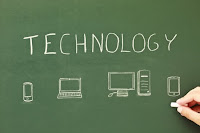 Kelly Hines post “It’s Not About the Technology” explains what educators must do in order to improve the education system. I love how Kelly Hines points out that the way to change education is to change our mindsets. Teachers have to be willing to work to learn how to teach children effectively. I have had teachers who did not use much technology in the classroom, yet I never found their teaching style to be outdated. The teachers encouraged group discussions and debate in the classroom and encouraged us to use our minds. Our teachers were able to teach us valuable lessons by just using the chalk boards and the creativity of their minds. As Kelly Hines says in her post, you can be a 21st century teacher without the use of technology.
However, if a teacher decides to use technology as a way to teach in a classroom, the teacher should know how to use the technology correctly. I had a math teacher in the past who wanted to use smart boards to teach a lesson, but they had no idea how to operate the machine. The teacher then spent the rest of the class trying to figure out how to work the smart board instead of teaching the class the intended lesson for the day. The only thing our class learned that day was that the teacher should either stick to using the dry-erase board in the back of the classroom or take classes to learn how to operate the smart board. Technology should not just become a decoration in the classroom. If a school wants to put expensive technology into a classroom, the teacher should learn how to use the technology in order to make sure it is worth the expense.
Karl Fisch: Is It Okay to Be A Technologically Illiterate Teacher?
Karl Fisch has definitely taught me something with his post, and it is that I should never be proud to say that I do not know how to work a computer. As a future teacher, it is my job to teach things that will be important and beneficial for the students to learn. Technology is a growing part of our world, which is why it is vital to teach students how to use it properly. In order to teach these students, I must know how to use technology myself. This is one of the many reasons that I am glad to be taking EDM 310 this semester. This class has already taught me so many things about technology and I know that I have so much more left to learn. The important thing is that I am making the effort to learn how to use technology.
Karl Fisch's post makes me think about how many schools will not hire new teachers if they are not technologically literate. Even though that adds extra pressure to future educators, I think it is a necessary requirement that deserves to be enforced. As an employer, you would not want to hire a math teacher who says "I'm not very good at math." You want a teacher to be able to teach what is currently vital to know, and in this day and age, technology definitely falls under that category.
Gary Hayes Social Media Count
As I watch the social media count grow higher and higher, I am almost at a loss for words. I always knew that our generation relied heavily on technology and social media, but it is shocking to see the statistics rapidly change right before your very own eyes! I look down the list of social media, and I realize that I myself rely on many of these sites and applications that are being calculated. This count helps further ingrain in my mind just how important technology has become in this century and why it is important for me to learn how to utilize these forms of technology in the classroom.
I realize that I have a lot to learn if I want to teach my students using technology. One thing I know is that I need to be a good role model for my students by using the social media sites properly. I have heard stories where teachers have posted heated complaints about students on facebook and they have gotten in trouble for their comments. As future educators, we need to realize that everything we put online can most likely be traced back to us, so it is important to be careful to watch what you say. I will make sure that I stay professional when I use sites such as twitter and facebook.
Michael Wesch: A Vision of Students Today
In this video, Michael Wesch creates a survey on GoogleDocs for 200 college students to share their input on technology and the education system. This video gives the students the chance to voice exactly how they feel, and I was able to see that I agreed with many of the things the students were saying. One reoccurring theme that stands out is how much money is spent, and sometimes put to waste, on education. One male student holds up a sign that says he spends hundreds on books that he does not even open. I can relate to this because I have purchased books that are worth hundreds that I was required to open once or twice to complete an assignment. Many teachers insist that you need to buy these expensive textbooks, and then when you do you find out that you only open the book once during the entire semester. That hardly seems like it was worth the money to purchase the book in the first place. If teachers expect students to spend the money on the books, I think it is key to make sure that the students get enough use out of them.
It is up to the teachers to capture their student's attention while they are teaching, because it is obvious from this video that students get distracted very easily in the classroom. I noticed a trend of technology being abused in the classroom. Some people brought in laptops and worked on stuff that did not pertain to the class or surfed the web. Teachers should provide online resources for the students to browse and reference during their class if they bring in their laptops. I realize that not every student will use technology properly while in the classroom.
Peer Editing
I chose to review my classmate's blog publicly because he did not have many mistakes. If my classmate's post contained a lot of mistakes, I probably would have contacted him privately to provide my edits. I would not want to embarrass my classmate by providing a long list of corrections on his post for everyone to see.
Peer editing is an important way to help provide positive, constructive feedback on other student's work. It is important to point out what you like about a post and what could use improvement. We should also remember not to take someone's advice personally when they are critiquing our work. Sometimes we just need another set of eyes to point out the mistakes we might have missed on our own.

However, if a teacher decides to use technology as a way to teach in a classroom, the teacher should know how to use the technology correctly. I had a math teacher in the past who wanted to use smart boards to teach a lesson, but they had no idea how to operate the machine. The teacher then spent the rest of the class trying to figure out how to work the smart board instead of teaching the class the intended lesson for the day. The only thing our class learned that day was that the teacher should either stick to using the dry-erase board in the back of the classroom or take classes to learn how to operate the smart board. Technology should not just become a decoration in the classroom. If a school wants to put expensive technology into a classroom, the teacher should learn how to use the technology in order to make sure it is worth the expense.
Karl Fisch: Is It Okay to Be A Technologically Illiterate Teacher?
Karl Fisch has definitely taught me something with his post, and it is that I should never be proud to say that I do not know how to work a computer. As a future teacher, it is my job to teach things that will be important and beneficial for the students to learn. Technology is a growing part of our world, which is why it is vital to teach students how to use it properly. In order to teach these students, I must know how to use technology myself. This is one of the many reasons that I am glad to be taking EDM 310 this semester. This class has already taught me so many things about technology and I know that I have so much more left to learn. The important thing is that I am making the effort to learn how to use technology.
Karl Fisch's post makes me think about how many schools will not hire new teachers if they are not technologically literate. Even though that adds extra pressure to future educators, I think it is a necessary requirement that deserves to be enforced. As an employer, you would not want to hire a math teacher who says "I'm not very good at math." You want a teacher to be able to teach what is currently vital to know, and in this day and age, technology definitely falls under that category.
Gary Hayes Social Media Count
As I watch the social media count grow higher and higher, I am almost at a loss for words. I always knew that our generation relied heavily on technology and social media, but it is shocking to see the statistics rapidly change right before your very own eyes! I look down the list of social media, and I realize that I myself rely on many of these sites and applications that are being calculated. This count helps further ingrain in my mind just how important technology has become in this century and why it is important for me to learn how to utilize these forms of technology in the classroom.
I realize that I have a lot to learn if I want to teach my students using technology. One thing I know is that I need to be a good role model for my students by using the social media sites properly. I have heard stories where teachers have posted heated complaints about students on facebook and they have gotten in trouble for their comments. As future educators, we need to realize that everything we put online can most likely be traced back to us, so it is important to be careful to watch what you say. I will make sure that I stay professional when I use sites such as twitter and facebook.
Michael Wesch: A Vision of Students Today
In this video, Michael Wesch creates a survey on GoogleDocs for 200 college students to share their input on technology and the education system. This video gives the students the chance to voice exactly how they feel, and I was able to see that I agreed with many of the things the students were saying. One reoccurring theme that stands out is how much money is spent, and sometimes put to waste, on education. One male student holds up a sign that says he spends hundreds on books that he does not even open. I can relate to this because I have purchased books that are worth hundreds that I was required to open once or twice to complete an assignment. Many teachers insist that you need to buy these expensive textbooks, and then when you do you find out that you only open the book once during the entire semester. That hardly seems like it was worth the money to purchase the book in the first place. If teachers expect students to spend the money on the books, I think it is key to make sure that the students get enough use out of them.
It is up to the teachers to capture their student's attention while they are teaching, because it is obvious from this video that students get distracted very easily in the classroom. I noticed a trend of technology being abused in the classroom. Some people brought in laptops and worked on stuff that did not pertain to the class or surfed the web. Teachers should provide online resources for the students to browse and reference during their class if they bring in their laptops. I realize that not every student will use technology properly while in the classroom.
Peer Editing
I chose to review my classmate's blog publicly because he did not have many mistakes. If my classmate's post contained a lot of mistakes, I probably would have contacted him privately to provide my edits. I would not want to embarrass my classmate by providing a long list of corrections on his post for everyone to see.
Peer editing is an important way to help provide positive, constructive feedback on other student's work. It is important to point out what you like about a post and what could use improvement. We should also remember not to take someone's advice personally when they are critiquing our work. Sometimes we just need another set of eyes to point out the mistakes we might have missed on our own.
Wednesday, September 7, 2011
Blog Post 2
Did You Know? by Karl Fisch and Scott McLeod

After viewing the video “Did you Know” I was left captivated and amazed by the presentation of statistics that dealt with education, jobs, and technology. This video makes me realize how things are rapidly changing and evolving. Even language has changed since Shakespeare’s time! The English language has increased the amount of words it is comprised of by five times the amount used when the playwright was alive. I never really stopped to think of how language changes over the years. Nothing really stays the same; things are constantly shifting to meet our needs and dreams for the future.
Technological advances such as Google’s search engine help student’s complete assignments and find sources for papers, all in the comfort and convenience of the location of their choosing. Have you ever noticed that teachers generally ask for students to provide more internet sources than print sources when writing a paper? The internet provides a faster and more efficient way to find information as opposed to sifting through a library to find a book. Most information that you can find in a book can be found online. This video enlightened me to how much the world can change even in the matter of a few short years. Technology is advancing so rapidly that it is basically impossible to keep up with what is new and up to date. Change can be scary, but it is something that we have to be prepared to handle if we want to be able to survive and thrive in this world.

This video reminds me how heavily our generation has grown through the use of technology. It starts with Mr. Winkle, who wakes up to find that the world has changed since he last walked its streets. Mr. Winkle is overwhelmed by the significant amount of change that has occurred following his 100 year slumber. Technology is used to help people out in ways that were never even imagined in Mr. Winkle’s time, and when he leaves his room he finds himself immersed in the fast-paced technological world. People are now able to speak to each other even at long distances and receive top-notch medical care all thanks to the use of machines. Mr. Winkle helps remind us how technology has become such a huge part of our lives. Those who are from an older generation might be experiencing great amounts of confusion and discomfort because of how technology is so heavily relied on.
The one place that Mr. Winkle finds comfort in is at a school. The structure of the school is familiar, almost parallel to the structure of school during Mr. Winkle’s time. Teachers give lectures, students take notes, and technology seems to be shut away for the duration of class minus a computer that is not even being used in class. Some things do not change and that provides a comfort. School isn’t reliant on technology in this video, which helps ease Mr. Winkle’s worries. This video does highlight that some characteristics of school are the same, but I think that technology is rapidly being integrated into the school systems. Many schools I have been to rely on smart boards and computers to take tests. I think that it is important to find a way to balance the right amount of technology used in the classroom.
Sir Ken Robinson: The Importance of Creativity 
I feel that it is our job as future educators to find a way to incorporate opportunities for children to foster their creativity during school. Art components can be added to other subject areas to provide children the chance to express themselves while learning material required by the state. For example, students can be asked to use clay to create the planets in the solar system. The students are using their hands to create a visual of the planets that they are learning about. When learning about other cultures, the teacher can teach the kids one of the cultures dances. There are always opportunities for educators to integrate the arts into the school day, the problem is finding creative ways to do so.
Cecelia Gault (Young Student in Finland) Interviews Sir Ken Robinson
Cecelia Gault, thirteen years old, attends a creative arts school where she is given the opportunity to express herself. During her interview, she shows how smart and well-spoken she is while asking Sir Robinson her questions. She is also very prepared, having written down questions to ask before she conducted the interview. She has a plan and she seeks to get the answers to all of her questions. As future teachers, we must encourage our students to find creative ways to express themselves. We must get the students to believe that they can do what they put their minds to. It is important to provide the opportunity for students who are not currently enrolled in a performing arts school the chance to express themselves as well.
Vicki Davis: Harness Your Students' Digital Smarts
In this video, Vicki Davis encourages her students to become technologically literate. Vicki Davis is able to connect her students to other parts of the world by using the technology in her classroom. I was able to see that Vicki provides guidance when she teaches, but she also expects the students to be able to learn information on their own. This is an incredibly smart tool to help students become independent learners. Students need to learn how to find out information on their own because teachers will not always be there to give step-by-step instructions on how to complete an activity. Students are forced to use their brains to figure out solutions to the problems they might run into. I can personally relate to this because I had an American-Literature teacher last semester who wanted us to be independent learners. When we met in class, he expected the students to lead the discussions and he would only offer guidance when he thought it to be necessary. If the teacher had merely lectured us and didn’t force us to think on our own, I would not have learned nearly half as much as I did in his class. Often in my classes one of the first things a student asks a teacher is what do I need to know in order to pass the class? Students in college still expect guidance from teachers and they get freaked out when they have to learn how to do something on their own.
I was able to see how important technology is and how students can grow as thinkers through the use of technology. I find it interesting that Vicki Davis does not feel that it is necessary to know how to do everything before trying to teach a class. She allows the students to figure things out on their own, and that makes the students proud of their achievements. It is amazing to see how much these students can accomplish when it comes to using technology. I am sure that they could teach me many things I have yet to learn on my own.
Saturday, August 27, 2011

Blog Post 1
About Me
My name is Brittany Enright and I am 20 years old. I grew up in Kensington, Maryland where I was raised by my lovely grandparents. My grandmother is originally from Alabama, and her daughter attended the University of South Alabama. When it came time for me to apply for college, my gran suggested that I follow in my Aunt Melanie’s footsteps and attend this university. Seeing as my gran is very persuasive, it came at no shock that I listened to her advice. I am incredibly close with my family and they mean everything to me. My family is rather small, but what we lack in numbers we make up for in personality. My grandpa, Raymond is a retired firefighter and one of the friendliest men I know. He is also one of the best cooks I know. Most everyone calls him Pops. My gran, Jacquelyn, who hates it when I call her grandmother, is the Dean of Administrations at Capitol College which is located in Laurel, Maryland. Maureen Hall is my mother, and she is a hairstylist who specializes in organic alternatives to hair care. My step dad Rick is a history buff, and when he is not at his job you can usually find him reading a book about war on our deck or watching the History Channel. My sister’s name is Elizabeth, and she is attending SCAD University. She is an artist through and through, as you can tell by the tattoos that she displays proudly on her body.
I can be shy at times but I really enjoy making people laugh and smile. I have always liked to help people with any problem they have, which is why I have often been called “mother” by my friends. I love to make a difference in people’s lives, which is a big reason why I want to enter the field of education. I hope to work with special needs children and I have wanted to do so for as long as I can remember. In high school, I helped student teach two special education classes. One of the teachers I helped student teach for introduced me to the program Art-Stream, which is a program that strives to bring the arts to the disabled. I was able to help out and even act in a musical with many of the kids who were in the classes I helped teach. Doing things like that, helping out in a wonderful and inspiring program, is something I am very passionate about. Here is a picture from the Art-Stream production I was in:
When I am not working or attending class, I like to read and draw. I would like to learn how to cook more than one meal, for all I know how to make at the time being is goulash. Hopefully I will learn a few more recipes before this semester is over. I hope to give my grandpa a little competition in the kitchen when I return home.
Randy Pausch on Time Management
Dr. Randy Pausch emphasizes how we can make the most out of our lives by learning how to manage our time wisely. I have learned from this video how important it is to make plans, because without making plans you do not have goals set out to achieve. Dr. Pausch also emphasizes that any plan is flexible, so you can always go back and edit your plan once you create it. With experience, time management will become something that is easy to master as long as it is something that is worked on. I can apply what I have learned in this video to make sure I do not fall behind in EDM 310. My checklist for this class will help me keep up with my assignments.
I found out about Dr. Pausch from a past roommate. She provided me with background information on him and pulled up his last lecture for me to watch with her.
My name is Brittany Enright and I am 20 years old. I grew up in Kensington, Maryland where I was raised by my lovely grandparents. My grandmother is originally from Alabama, and her daughter attended the University of South Alabama. When it came time for me to apply for college, my gran suggested that I follow in my Aunt Melanie’s footsteps and attend this university. Seeing as my gran is very persuasive, it came at no shock that I listened to her advice. I am incredibly close with my family and they mean everything to me. My family is rather small, but what we lack in numbers we make up for in personality. My grandpa, Raymond is a retired firefighter and one of the friendliest men I know. He is also one of the best cooks I know. Most everyone calls him Pops. My gran, Jacquelyn, who hates it when I call her grandmother, is the Dean of Administrations at Capitol College which is located in Laurel, Maryland. Maureen Hall is my mother, and she is a hairstylist who specializes in organic alternatives to hair care. My step dad Rick is a history buff, and when he is not at his job you can usually find him reading a book about war on our deck or watching the History Channel. My sister’s name is Elizabeth, and she is attending SCAD University. She is an artist through and through, as you can tell by the tattoos that she displays proudly on her body.
I can be shy at times but I really enjoy making people laugh and smile. I have always liked to help people with any problem they have, which is why I have often been called “mother” by my friends. I love to make a difference in people’s lives, which is a big reason why I want to enter the field of education. I hope to work with special needs children and I have wanted to do so for as long as I can remember. In high school, I helped student teach two special education classes. One of the teachers I helped student teach for introduced me to the program Art-Stream, which is a program that strives to bring the arts to the disabled. I was able to help out and even act in a musical with many of the kids who were in the classes I helped teach. Doing things like that, helping out in a wonderful and inspiring program, is something I am very passionate about. Here is a picture from the Art-Stream production I was in:

When I am not working or attending class, I like to read and draw. I would like to learn how to cook more than one meal, for all I know how to make at the time being is goulash. Hopefully I will learn a few more recipes before this semester is over. I hope to give my grandpa a little competition in the kitchen when I return home.
Randy Pausch on Time Management
Dr. Randy Pausch emphasizes how we can make the most out of our lives by learning how to manage our time wisely. I have learned from this video how important it is to make plans, because without making plans you do not have goals set out to achieve. Dr. Pausch also emphasizes that any plan is flexible, so you can always go back and edit your plan once you create it. With experience, time management will become something that is easy to master as long as it is something that is worked on. I can apply what I have learned in this video to make sure I do not fall behind in EDM 310. My checklist for this class will help me keep up with my assignments.
I found out about Dr. Pausch from a past roommate. She provided me with background information on him and pulled up his last lecture for me to watch with her.
Subscribe to:
Posts (Atom)
